Google TPUs Power AI at Meta in Direct Challenge to Nvidia's Grip
Meta is now running AI workloads on Google's custom silicon, a move that could reshape the competitive landscape for AI hardware and software.
By Kavya Kapoor ·
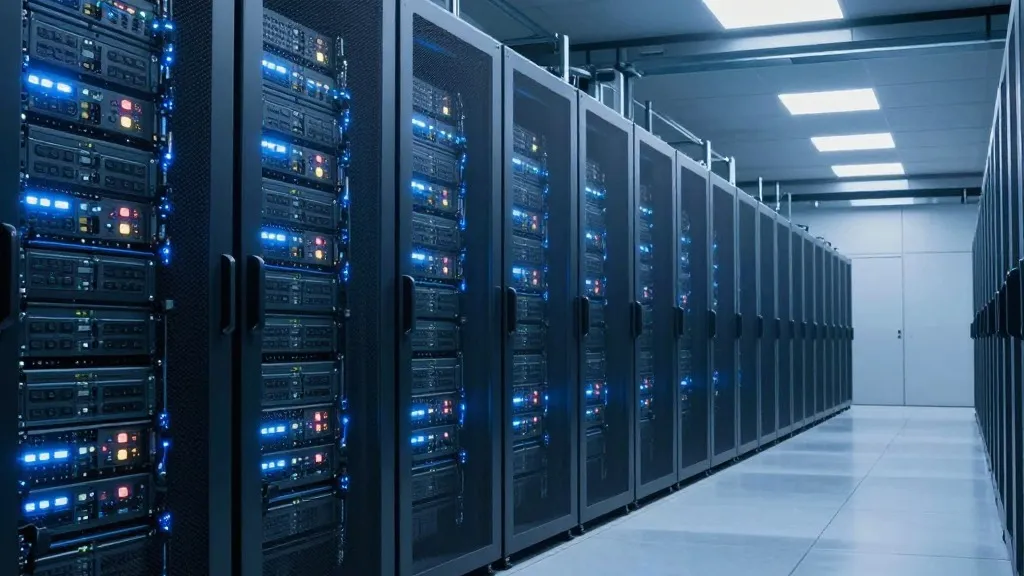
Google's custom AI processors have begun operating inside Meta's data centers, a significant development announced on Google's developer blog. This marks the first time Google's tensor processing units, or TPUs, are being sold to an external customer for production use, directly challenging Nvidia's market dominance in the AI hardware space. The deployment is enabled by a new PyTorch-native version of the SGLang inference engine, which allows the hardware to be used with PyTorch, Meta's own AI framework.
The integration provides Meta with "a remarkably mature, PyTorch-native serving stack," according to Zongwei Zhou, Meta's PyTorch-TPU lead. This new capability is a result of a three-way collaboration between Meta, Google, and the SGLang team, with a matching version of another popular inference engine, vLLM, also being released as open source. Previously, both engines required Google's own JAX framework to run on TPUs.
This marks a renewed effort by Meta to utilize Google's hardware for its AI needs. Prior to this, Meta had used a different bridge between PyTorch and TPUs from 2020 to 2023 before canceling those contracts. Jana van Greunen, director of PyTorch engineering at Meta, stated that the company "cannot be constrained by a single hardware architecture" and that the new integration "enables us to deploy our PyTorch workloads to Google TPUs." Google confirmed it co-developed the new TorchTPU software with Meta's PyTorch team.
The move comes as a direct response to Nvidia's long-standing hold on AI software. Google's announcement was made one day after Amazon open-sourced its own native PyTorch backend for its Trainium chips at the same PyTorch Conference. Both initiatives are clearly aimed at reducing developers' reliance on Nvidia's proprietary software ecosystem.
Performance figures released with the announcement show the new setup is capable of high-speed AI model serving. A test using the vLLM engine on Google's seventh-generation Ironwood TPU reportedly achieved over 700 tokens per second for a single user running a 2.8-trillion-parameter model. This is compared to a figure of 452 tokens per second from a setup using 16 Nvidia GB200 chips. The test was conducted by Inferact, the startup founded by vLLM's creators.
Google, Meta, and RadixArk, the startup that created the SGLang engine, are scheduled to share more details about the collaboration at the SGLang Summit 2026, which is set for November 12-13 in San Francisco. The new SGLang-TorchTPU engine will continue to add support for more models, with plans to support new open models on their release day by the first quarter of 2027.
The deployment of Google's TPUs at Meta is a pivotal moment for the AI industry, as major tech companies work to diversify their hardware supply chains beyond Nvidia. While details about where Meta's production TPUs are located remain unclear, reports from last year indicated that talks involved renting Google Cloud TPUs in 2026, with a purchase option in 2027, and Meta later signed a multi-year rental agreement. This partnership provides Google with a major external customer for its chips, a key step in its strategy to compete for a share of the multi-billion dollar AI market.
Source: Tom's Hardware